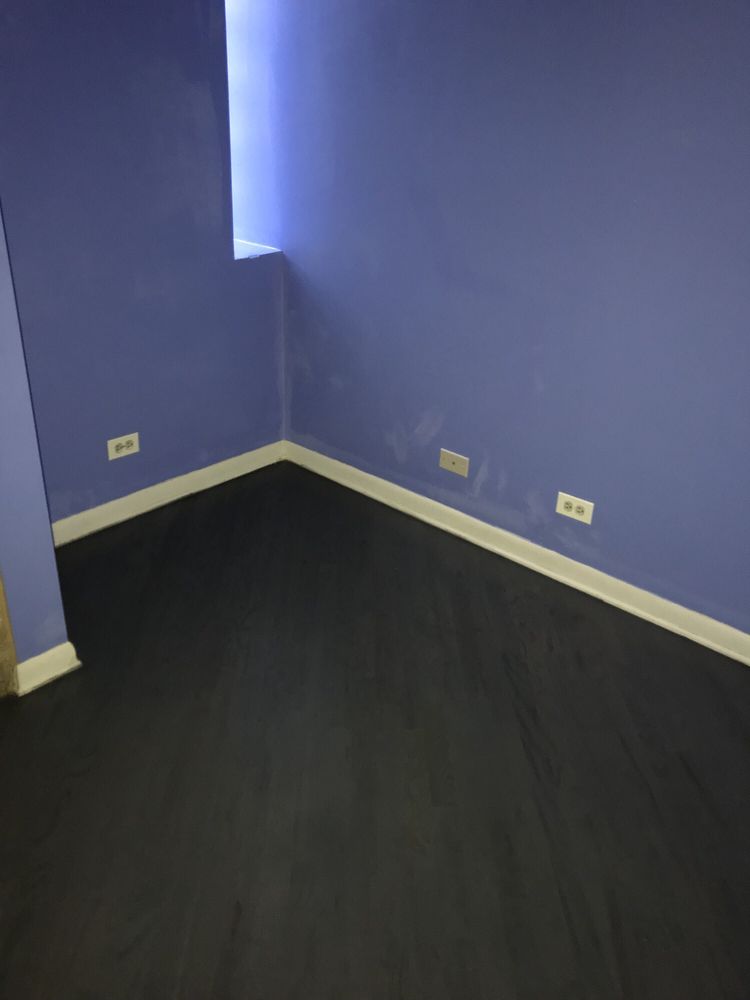
Laminate Flooring Installation in Naperville & Western Suburbs
Laminate flooring offers one of the most realistic wood looks available at a price point well below solid hardwood or engineered wood. Modern laminate — particularly high-pressure laminate (HPL) and newer AC3/AC4 rated products — is significantly more durable and better-looking than laminate from a decade ago. In the right application with a professional installation, it's a smart choice.
The catch with laminate is that the installation quality matters enormously. Laminate is installed floating — it sits on top of the subfloor rather than being fastened to it. This means any bumps, low spots, or irregularities in the subfloor transmit directly through the floor surface. A bouncy, noisy laminate floor is almost always a subfloor prep problem, not a product problem.
We properly level and prepare subfloors before every laminate installation. This is the step that separates a laminate floor that looks and feels solid from one that bounces, creaks, and feels cheap. We don't skip it to save time.
Our Laminate Installation Process
1
Subfloor Inspection & Leveling
We check for high and low spots using a long straightedge and address any irregularities — grinding high spots, filling low spots — before anything goes down. Laminate requires a flat surface within ⅛" per 6 feet.
2
Moisture Barrier Installation
In basements and over concrete, a moisture barrier is installed before underlayment to prevent moisture vapor from migrating up into the laminate core.
3
Underlayment
Quality underlayment provides cushioning, noise reduction, and additional moisture protection. Some premium laminates come with underlayment pre-attached; others require a separate layer.
4
Floating Installation
Planks are clicked together in a staggered pattern. We account for proper expansion gaps at all walls and transitions — this is critical for laminate, which expands and contracts with humidity.
5
Transitions & Trim
T-moldings, reducers, stair nosing, and threshold strips are installed to professionally finish all transitions between rooms, flooring types, and elevations.
When Is Laminate the Right Choice?
- Budget-conscious projects — laminate is typically $1.50–$4 per sq ft in material versus $5–$12 for hardwood
- Rental properties and investment properties — holds up to tenant use and is cost-effective to repair or replace sections
- High-traffic areas like hallways, playrooms, and home offices — better scratch resistance than many hardwoods
- Areas where you want the hardwood look at a fraction of the cost (dry areas only — kitchens and dining rooms, not bathrooms or basements)
- Spaces over concrete where solid hardwood isn't appropriate (use LVP over concrete if moisture is a concern)
Laminate vs. LVP — Which Should You Choose?
This is one of the most common questions we get. Laminate and LVP are both floating floor systems in a similar price range, and both offer realistic wood looks. The key difference: laminate is not waterproof. The core of laminate is pressed wood fiber, which swells permanently if it gets wet. LVP has a rigid plastic core that is truly waterproof.
For dry areas — bedrooms, living rooms, dining rooms, and above-grade main floors — laminate is a perfectly good choice. For kitchens, basements, bathrooms, or anywhere moisture is a regular concern, LVP is the better option. We'll help you make the right call during the estimate.
How Much Does Laminate Installation Cost in Naperville?
Laminate installation in the Naperville area typically costs $2–$4 per square foot for labor, plus $1.50–$4 per square foot for materials depending on quality and brand. A 500 sq ft main floor might run $1,800–$3,500 all-in. We provide detailed written quotes after seeing your space.
Related Services
You Might Also Need