Hardwood Floor Refinishing in Naperville & Western Suburbs
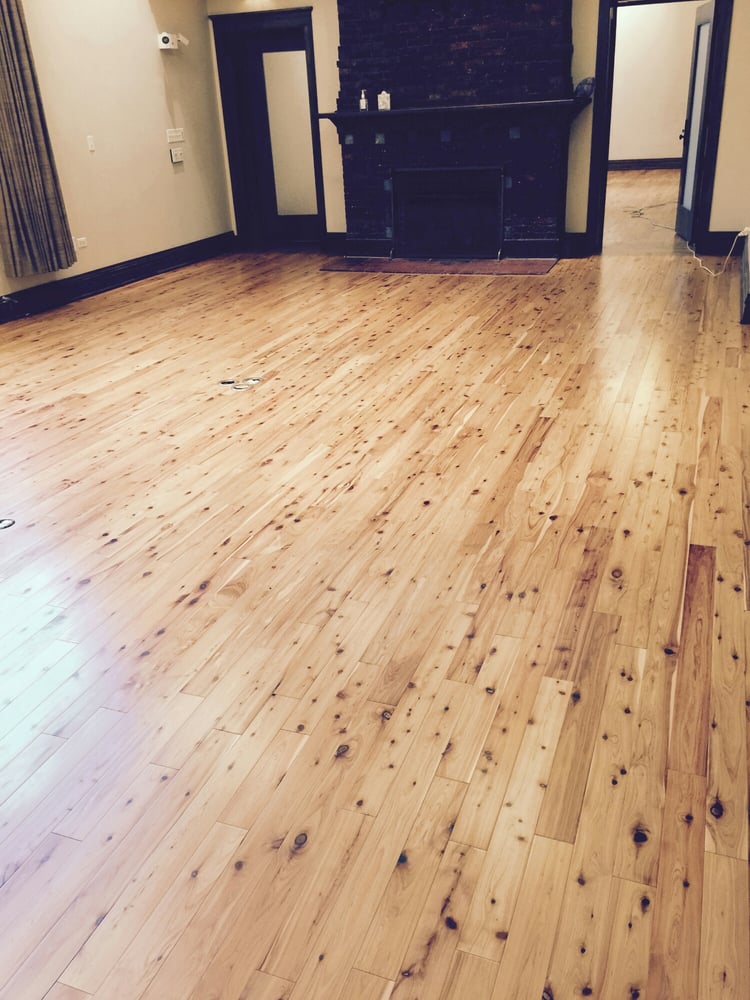
Hardwood floor refinishing is one of the highest-value improvements a Naperville homeowner can make. For a fraction of what full replacement costs, professional refinishing transforms worn, scratched, or dated floors into something that looks genuinely new — and can add real value to your home before a sale or simply make your daily life better.
Angel Hardwood Floor Corp has been refinishing hardwood floors across Naperville, Lisle, Wheaton, Downers Grove, and the surrounding western suburbs for over a decade. We've restored everything from century-old pine floors in downtown Naperville to newer red oak in subdivisions throughout DuPage and Will County.
Solid hardwood can be sanded and refinished 5–8 times over its life depending on thickness. If your floors are original hardwood, there's a very good chance they can be brought back to excellent condition without replacement. We'll assess the board thickness and condition honestly during the free estimate.
What Refinishing Addresses
- Surface scratches, scuffs, and wear patterns from years of foot traffic
- Dull, yellowed, or peeling finish
- Outdated stain colors (honey oak, orange, or worn finishes)
- Minor gaps, cracks, and surface imperfections (filled before finishing)
- Pet stains and water rings that haven't penetrated too deeply
- Uneven coloring or blotchy finish from a previous poor refinish job
- Carpet adhesive or tile residue revealed after removing old coverings
Sanding does not fix everything. Deep gouges, cupped or water-damaged boards, split planks, and squeaks coming from the subfloor need floor repair in Naperville handled first — we make those repairs before the sander touches the floor, so the patched areas take stain evenly and disappear into the surrounding wood instead of standing out under a fresh finish.
Our Refinishing Process
1
Free Assessment
We inspect your floors for board thickness (determines how many future refinishes are possible), existing finish type, any needed repairs, and overall condition. We'll tell you honestly if refinishing is the right call.
2
Repair & Prep
Any damaged boards, gaps, or problem areas are addressed before sanding begins. Furniture is moved, floor vents are covered, and dust containment plastic is set up at doorways.
3
Dust-Controlled Sanding
We use professional drum sanders and edgers with dust containment systems that capture the majority of sanding dust at the source. This keeps your home significantly cleaner than old-style sanding methods.
4
Stain Application
Your chosen stain color is applied and given time to penetrate the wood. We test stain on an inconspicuous area first to confirm you're happy with the result before doing the entire floor.
5
Finish Coats
Two to three coats of polyurethane or oil-based finish are applied, with light sanding between coats. Each coat is inspected before the next is applied.
6
Cure & Walkthrough
We give you specific cure time guidance for your finish type and walk through the floor with you before we leave. Any concerns are addressed on the spot.
Stain Colors & Finish Options
Choosing the right stain color is one of the most exciting — and sometimes stressful — parts of the refinishing process. We have samples of all major stain colors and can test them on your actual floors before committing. Popular choices in the Naperville area include:
- Natural / no stain — lets the wood's natural color come through, seals with clear finish
- Early American — light warm brown, the most versatile and popular for oak
- English Chestnut — medium warm brown with red undertones
- Provincial — medium brown, slightly cooler tone, works beautifully on red oak
- Dark Walnut — rich, popular dark brown; significant transformation on lighter floors
- Jacobean — very dark brown, almost black; dramatic and popular in modern spaces
- Special Walnut — medium-dark with subtle gray undertones
- Gray/whitewash stains — increasingly popular for contemporary and Scandinavian-influenced interiors
For finish sheen, we offer matte, satin (most popular), and semi-gloss in both water-based and oil-based formulas. Water-based finishes dry faster and have less odor; oil-based finishes are more durable and have a warmer amber tone.
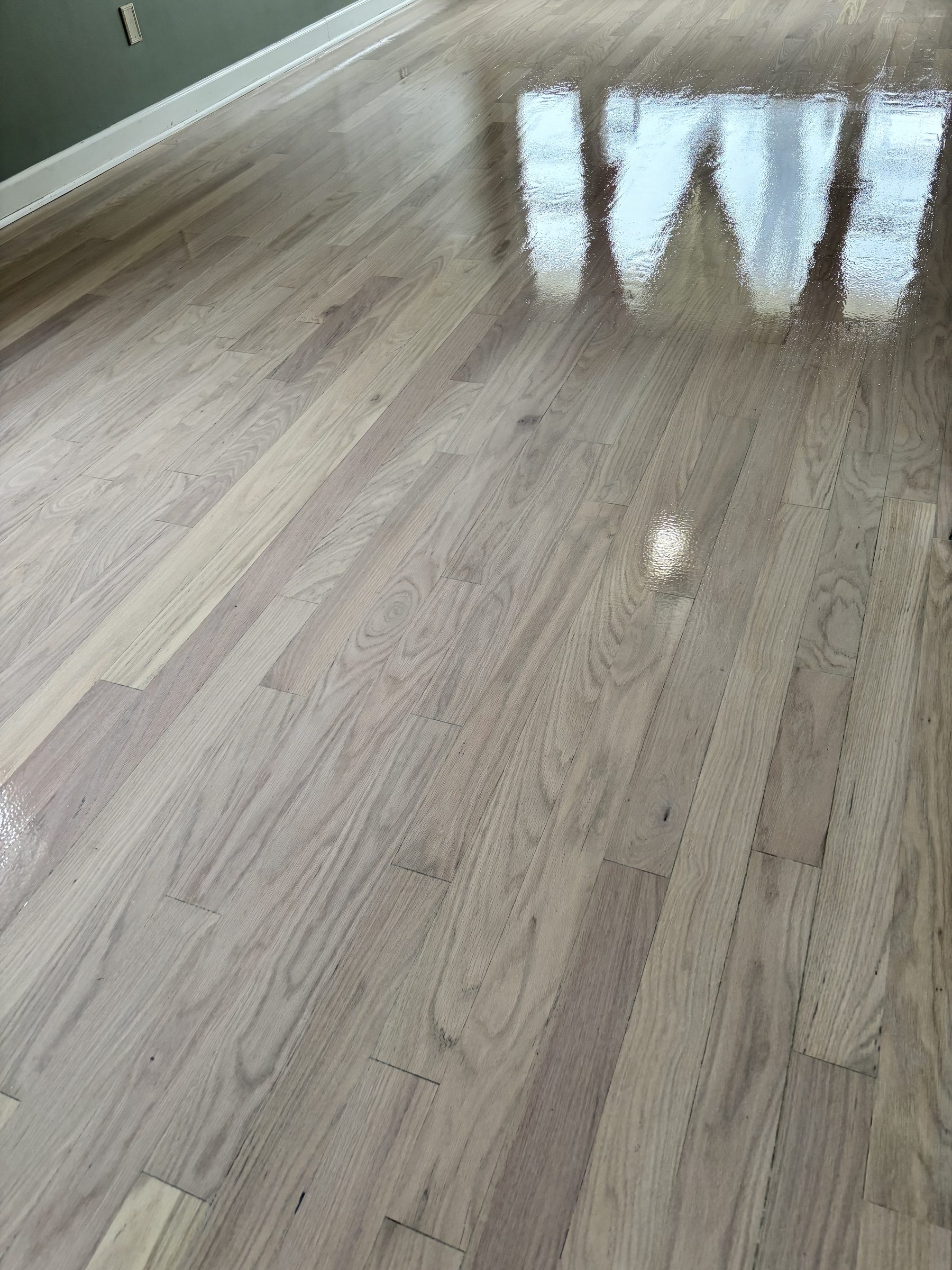
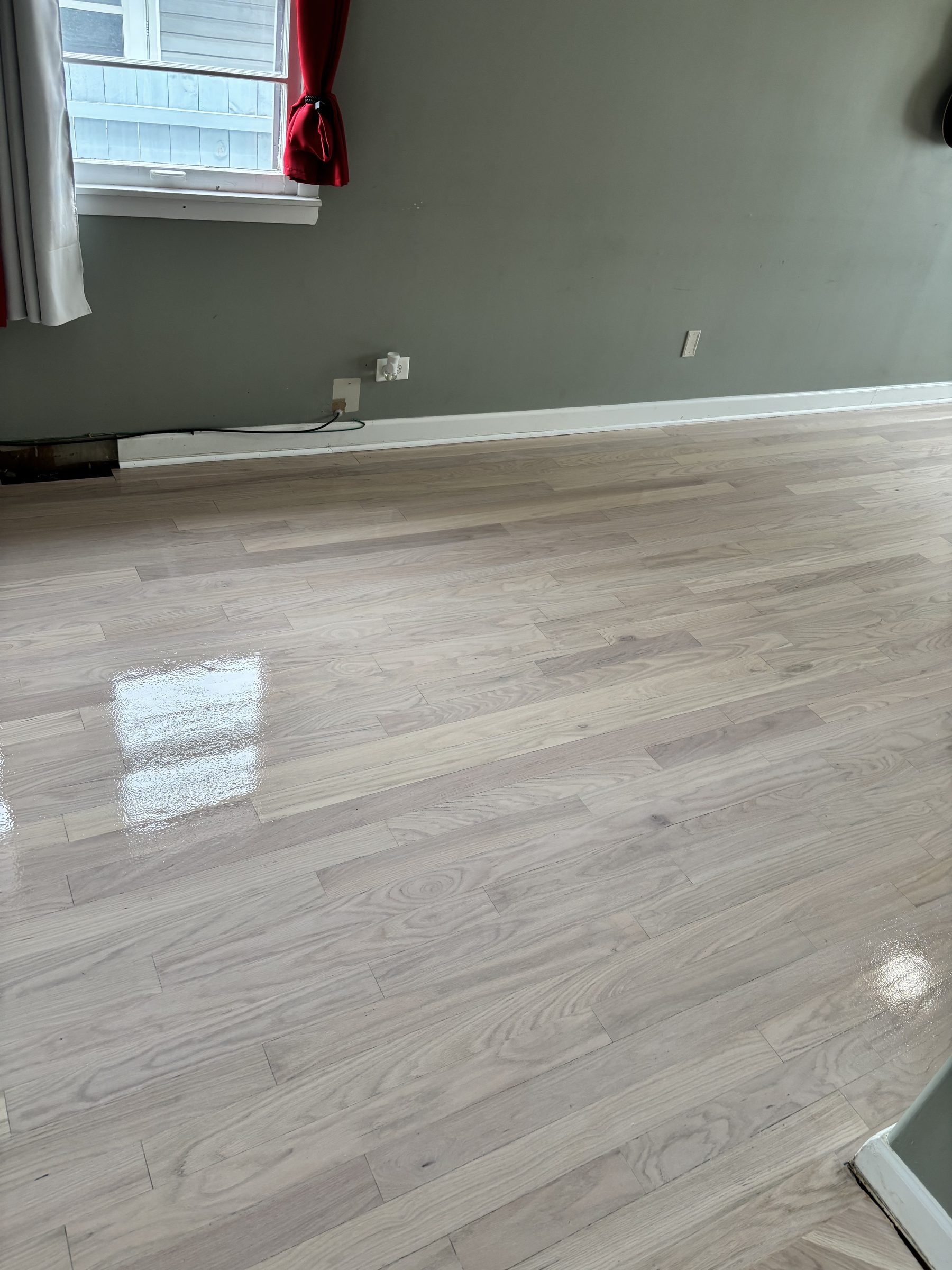
Featured Project — Red Oak Refinish & Stain Update
A recent restoration where we sanded out a worn, dated finish on red oak strip hardwood and applied a fresh natural stain with three coats of polyurethane. The wet-finish photo shows the floor immediately after the final coat — once dry, the wood looks completely revitalized while keeping its original character intact.
How Much Does Hardwood Floor Refinishing Cost in Naperville?
Refinishing costs in the Naperville area typically run $3–$5 per square foot depending on floor condition, stain choice, and the number of finish coats. A 500 sq ft main floor might run $1,500–$2,500. This is a fraction of what full replacement costs — new hardwood installed typically runs $10–$18 per square foot for material and labor combined.
We give you a firm quote after seeing your floors in person. There are no surprise charges after the work begins.
Related Services
You Might Also Need